- Get link
- X
- Other Apps
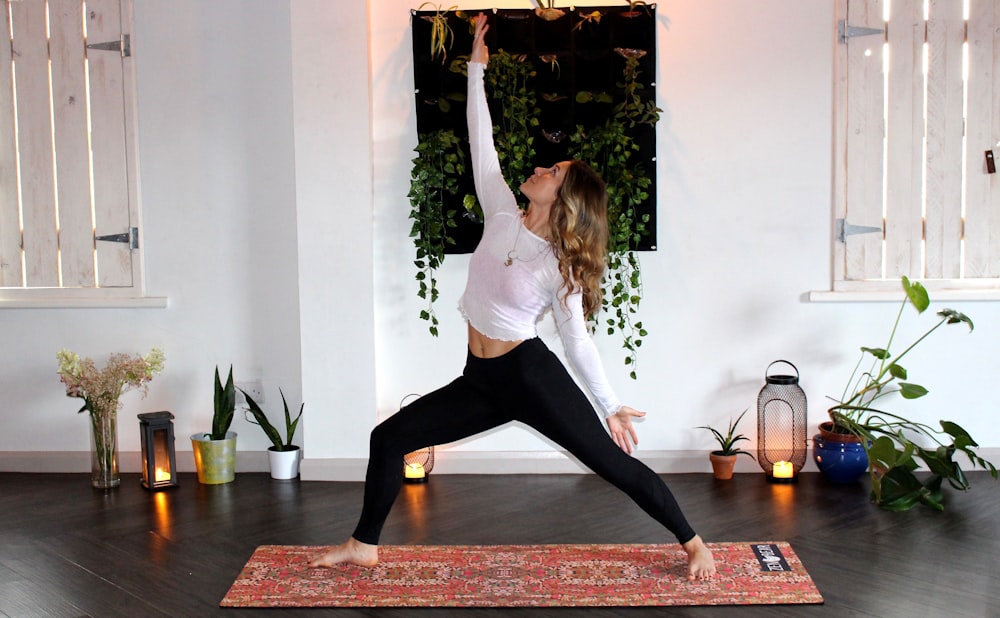
Introduction
Increasingly, you'll hear about your companions enrolling in Hatha classes at the local gym. In terms of pure popularity, yoga is favorite within the yoga world. As a result, the poses are known well by both beginners and experts.Hatha yoga poses are called Asanas. The Asanas are utilized in combination with meditation and therefore the breathing techniques referred to as Pranayama. Together they work the body to enhance strength and adaptability also as overall health, which is one among the explanations it's so popular. Hatha yoga may be a hybrid of the Sanskrit words “ha” which suggests “sun” and therefore the word “the” which suggests the “moon.” Together, they ask the way that Hatha’s yoga poses often compile opposites currents within the system.
Of the eight limbs of yoga, Hatha focuses totally on the third, which is Asana, and therefore the fourth, which is Pranayama. These pose and posture techniques including the breathing patterns are wont to filter out your body’s energy channels, referred to as the Nadis. This, in turn, removes obstacles that would hamper other limbs helping to enhance you're well being.
Benefits
Many people plan to take up yoga as a sort of stress relief, and studies have actually proven that practicing yoga can lower the amount of the strain hormone, cortisol, within the body. one of the ways it reduces stress and relieves tension within the body is by controlled breathing, also referred to as pranayama.
Hatha yoga also has physical benefits too. It’s great for strengthening the muscles in your body, particularly in your core and around your spine. In turn, this improves your posture and may assist you to perform better in physical activities like sports and reduce your chances of injury.
As well as strengthening your body, yoga will improve your muscular strength and increase your overall flexibility, by elongating your muscles and lubricating the joints.
People of all abilities can enjoy Hatha yoga for its physical, emotional, and spiritual benefits, it’s the most effective type for beginners to start out with. Classes will usually teach yoga poses for beginners, alongside breathing techniques. Poses are going to be administered at a way slower pace than in other sorts of yoga, which can offer you the chance to know and master them.
Building a powerful foundation is crucial for growth in yoga ability!
Are you able to see what yoga has got to offer? Here are 12 poses for beginners to induce you started.
1. Tadasana (Mountain Yoga)
This one may seem like you’re ‘just standing’ but it’s a key a part of finding balance and is integral to yoga practice.
- Stand along with your legs mildly apart and your hands must be by the side of your body, palms facing outwards.
- Keep your torso and spine straight, ensuring they're aligned together with your legs and your weight is evenly distributed.
- Gently inhale while you bring your arms up, over your head and fold your hands into a prayer position.
- Stay in this pose for a minimum of 60 seconds, as you breathe deeply in and out.

2. Virkshasana (Tree Pose)
Tree pose is best for improving your balance and can follow on nicely from mountain pose during a yoga sequence.
- Start in mountain pose.
- Transfer your weight to your right foot.
- Lift your left foot and gently rest it on your inner thigh.
- Make sure your knee is clothed to the side and keep your pelvis open.
- Make your concentration as you maintain your balance deep while your balance, as you breathe deeply in and out.
- Hold for a couple of breaths before repeating on the other leg.

3. Uttanasana (Standing Forward Bend Pose)
This is one of the hatha yoga poses for beginners that may get easier with practice. As a beginner, you'll not be ready to do the complete stretch but your hamstrings will become familiar with it, over time.




- Stand up straight together with your feet shoulder-width apart.
- Stretch your arms up, over your head, and start to bend and also the waist.
- Lower your upper body in order that your forehead and chest rest near your thighs.
- If you can, hold onto the rear of your ankles along with your hands.
- Hold on to this pose for 20-30 seconds, before slowly releasing.
4. Adho Mukha Svanasana (Downward Facing Dog Pose)
When you consider yoga, we bet the downward dog pose is that the first that springs to mind. It’s a really important yoga pose that stretches the body, especially, your hamstrings, arms, and calves. It’s also great for releasing tension and strengthening the body.- Position yourself on your hands and knees.
- Keep your hands in line together with your shoulders and your knees in line with your hips.
- Slowly lift your knees, until they're straightened.
- Make sure your head is in line together with your arms.
- Hold for 20-30 seconds, remembering to breathe deeply.
5. Setu Bandhasana (Bridge Pose)
This pose may be a backbend that will stretch your chest, neck, and spine.- Lie down on your back together with your knees bent, keeping your feet flat on the ground.
- Keep your arms rest by your side.
- Move your heels so they’re as on the brink of your bottom as possible.
- Slowly inhale and as you exhale, press your feet and arms firmly into the mat and push your hips .towards the ceiling.
- Raise your chin off your chest and keep your shoulders down.
- Stay in the pose for up for 30 seconds.
- Gently release and slowly roll your spine backtrack to your mat.
6. Paschimottanasana (Seated Forward Bend Pose)
Like with the standing forward bend, this is often one among the yoga poses for beginners which will take a touch time to induce right. With daily practice, the seated forward bend pose will truly increase your muscles flexibility, whilst also strengthening your lower back.- Sit on your yoga mat together with your legs get in front of you, keeping your back straight.
- Breathe in and convey your hands above your head to elongate your torso.
- As you exhale, bend forward at the hips, keeping your back as straight as possible.
- Bring your hands as far down as your legs as you'll able to.
- You should feel a stretch but you shouldn’t be in pain, bend your knees slightly if it’s an excessive amount of for you.
- Hold for 20-30 seconds.
7. Ardha Matsyendrasana (Seated Spinal Twist Pose)
This seated asana has various different names, with one being ‘Half Lord of the Fish.’ It’s great for relieving strain within the spine and inspiring mobility.- Sit on your mat together with your legs together, stretched ahead of you.
- Lift your right leg over your left leg, placing the only of your foot on the ground next to your left thigh.
- Bend your left knee and place your leg under the upper section of your right thigh.
- Place your right on the ground behind you.
- Inhale as you twist your body until your left elbow reaches your right kneecap.
- Exhale and switch your upper body and head to the proper to deepen your twist.
- Hold for 30 seconds, rest, and repeat on the opposite side.
- Like many yoga poses for beginners, the seated spinal twist pose sounds more complicated than it actually is.
8. Trikonasana (Triangle Pose)
This asana is meant to interact with the whole body while strengthening and toning the thighs, knees, and ankles especially.- Begin standing during a wide-legged position.
- Breathe in as you raise both arms up, keeping them parallel with the ground.
- Breathe out and slowly drop your right down to your right foot.
- Keep your left arm extended towards the ceiling.
- Hold for several breaths.
- Repeat on the other side.
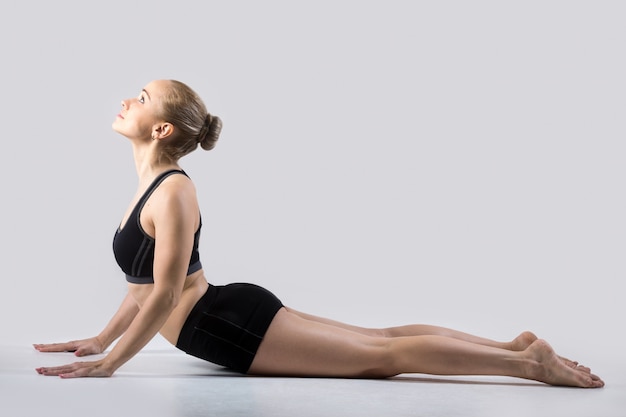
9. Cobra Pose
The Cobra pose or Bhujangasana may be a basic yoga pose. Essentially, it’s a mild backbend that will stretch your abdomen and shoulders, while opening up your lungs.- Start by lying on your front, together with your face down.
- Place your hands under your shoulders, ensuring your elbow is tucked in.
- Slowly lift your upper body off the mat, pressing your palms into the bottom.
- Look up slightly and still breathe deeply.
10. Virabhadrasana II (Warrior 2 Pose)
The name may be a little bit of a revelation to the actual fact this pose is all about building strength.- Stand together with your legs wide, turning your right toe out.
- Inhale as you raise your arms up, keeping them parallel with the ground.
- Exhale as you bend your right knee.
- Turn your head to seem over your right.
- Hold for several breaths.
- Repeat on the other side (turning your left toe out, bending the left knee and searching over your left hand)
11. Balasana (Child’s Pose)
Child’s pose may be a restorative forward bend that's often practiced between other yoga poses for beginners to alleviate tension and permit the body to rest momentarily.- Kneel on your mat and reach forward together with your arms.
- Drop your head to your mat.
- Close your eyes as you enjoy the stretch, breathing deeply in and out.
12. Shavasana (Corpse Pose)
Most yoga classes will pack up with the corpse pose. It’s a restorative pose that’s all about relaxation – you’re guaranteed to love it!- Lie back on your mat, resting your arms by your sides, together with your legs hip-width apart.
- Close your eyes and gently exhale and inhale.
- Hold for several minutes until you are feeling fully relaxed.

Comments
Post a Comment